
Sex Offender Checks in Collingsworth County
The Texas Public Sex Offender Registry, managed by the Texas Department of Public Safety, is the main public source for addresses reported in Collingsworth County. There is no separate county directory. The statewide tool can find a person by name or examine an area by address, city, county, ZIP Code, and available map controls. A reader can begin with a broad Collingsworth County filter, then narrow the list with a known first name, street, or town.
Local questions take a different route. The Collingsworth County Sheriff's Office can help identify the proper registration authority and receive reports of suspected noncompliance. Its published number is 806-447-2588. The official material does not identify a separate registration desk, appointment schedule, fee, or alert program. Call before visiting. Ask whether the sheriff or Wellington Police Department manages registration for the address in question, since the correct authority can depend on where the person lives.
Safe Collingsworth Registry Workflow
A place search works best as a short safety routine, not as a hunt for one alarming label. Begin with the area that matters, review the list, and open each possible match. Compare the photograph, physical description, aliases, and reported address. Then read the offense details, status, and last verification fields as separate facts. The registry does not rank a person's current risk in one simple score.
If a profile seems stale, preserve the URL and note the disputed field. Report it to the proper registration authority. Do not visit the address or contact the registrant. The authority can compare the public entry with its registration records and decide whether follow-up is required.
Note: A registry address is a reported public field, not permission to enter property, confront a resident, or spread an unverified claim.
How to Search the Texas Public Sex Offender Registry
The DPS interface separates searches by person from searches by place. That distinction helps avoid a common mistake. A name search answers whether a likely person appears, while a location search shows reported registrants near a place. Neither route proves that every person found is the person sought. Use more than one field and read the full record.
- Open the official DPS registry and review its conditions of use.
- Choose name or location mode, then enter the best known fields.
- For a local area, choose Collingsworth County or enter Wellington, Dodson, an address, or a ZIP Code.
- Open possible matches and compare the photograph, descriptors, address, offense, status, and verification dates.
| Field or control | Type | Required | Use |
|---|---|---|---|
| Search by Name / Location | Mode tabs | Choose one | Separates person and place searches |
| Last Name | Text | Name route | Check spelling and known aliases |
| First Name | Text | Optional | Narrows common surnames |
| Address and City | Text | Location route | Supports a local proximity search |
| County | Select | Optional | Choose Collingsworth for county results |
| ZIP Code and Radius | Text / select | Optional | Refines the search area; live options may change |
| Map / List | View control | No | Changes how geographic results appear |
Collingsworth Address or Name Search
An address search is the better first choice for neighborhood awareness. It can reveal reported records around a home, school route, park, or family destination without assuming a person's identity. Enter the full street address when known and use the radius shown by the live interface. A city-only search for Wellington or Dodson is broader. A county filter is broader still and can help when a rural address does not map cleanly.
A name search is more useful when the reader already has a specific identity to check. Use the last name first, add the first name if the list is large, and compare aliases. Names can collide. The photograph, date of birth or age, physical description, and reported place help separate people. If the person may have moved across a state line, the national system provides a wider check.
Inside a Registry Profile
A DPS profile combines identity, registration, address, and offense fields. Some entries contain more data than others, so a blank field should not be treated as a negative fact. Read each field in context. The offense date and conviction date differ from the date the current address was verified. Likewise, registration status is not a complete account of every court case in the person's past.
| Name and aliases | Published identity names used to distinguish records. |
|---|---|
| Photo and description | Current photograph when available, plus sex, race, age or birth data, height, weight, hair, and eye color. |
| Reported locations | Residence and, when law permits publication, institution, work, or school information. |
| Other identifiers | Vehicle information and scars, marks, or tattoos when present. |
| Offense record | Description, statute, conviction date, court or place, and victim sex or age category where published. |
| Status and dates | Registration type, current status, and reporting or verification dates. |
Collingsworth Registry Identity Checks
A common surname or familiar face is not enough to confirm a match. Compare aliases, photograph, age or birth details, height, weight, hair and eye color, and any listed marks. Then compare the reported residence and vehicle fields. Several points that agree provide a stronger basis than a name alone, but the public profile still should be read as the state's reported record rather than personal proof gathered by a neighbor.
If the profile plainly belongs to someone else, return to the results and refine the name or place fields. Avoid saving, sharing, or discussing an entry that cannot be tied to the right person. Careful identity work reduces harm from a false match and keeps the search focused on lawful safety needs.
Collingsworth Registry Verification Status
Verification dates deserve close attention. Texas law can require annual checks, checks every 90 days, or another schedule tied to the registrant's category and status. A date does not by itself explain the full legal duty. Review the status shown on the profile and the underlying offense, then ask the local authority about a suspected lapse.
An address that looks old is not proof of a crime. The entry may be awaiting an update, the move may have been reported through another authority, or the reader may have found the wrong person. Save the profile information and call the Collingsworth County Sheriff's Office. For urgent danger, call 911. For a routine data concern, give law enforcement enough detail to identify the profile without making public accusations.
Texas Registration Levels and Requirements
Texas does not present every registry entry as a simple federal Tier I, II, or III label. Chapter 62 ties the duty and duration to the reportable conviction, statute, release or supervision history, and special rules. Some contexts also use risk assessments. The public profile and the registration authority are better sources than a tier guessed from an offense title.
| Texas category | General duration | Verification |
|---|---|---|
| Offense listed in Article 62.101(a) | Lifetime | Annual, every 90 days, or another statute-based schedule |
| Other reportable conviction or adjudication under Article 62.101(b) | Generally 10 years after the statute's release, discharge, parole, or supervision point | Depends on the applicable category and status |
| Civil commitment, repeat, or specially listed circumstance | Lifetime or other special treatment | Confirm through the profile and authority |
Juvenile and other special rules can differ. Legal relief may also affect a duty. Do not infer the end date from the conviction label alone.
Report Outdated Collingsworth Registry Data
When a listed address, vehicle, or verification date seems wrong, record the exact field and the public profile link. Call the Collingsworth County Sheriff's Office and ask whether it is the registration authority for that address. If another agency holds that role, request the correct referral. Give the office the facts shown by DPS and explain why the field may need review.
Do not announce that the person has violated a duty. Law enforcement must compare the public entry with nonpublic source records and the applicable reporting schedule. Reporting through that channel gives the authority a usable lead while avoiding confrontation, rumor, or harm.
Beyond Collingsworth With NSOPW
The National Sex Offender Public Website is useful when an address lies near a state line, a person has moved, or the search area spans more than Texas. NSOPW queries participating public registries through one federal interface. It adds geographic reach but does not replace the source record. Open the state profile when available and rely on its status and verification details. The DPS public interface itself is documented in the official alternate registry entry point. The image below shows that government search channel without reproducing a private person's record.
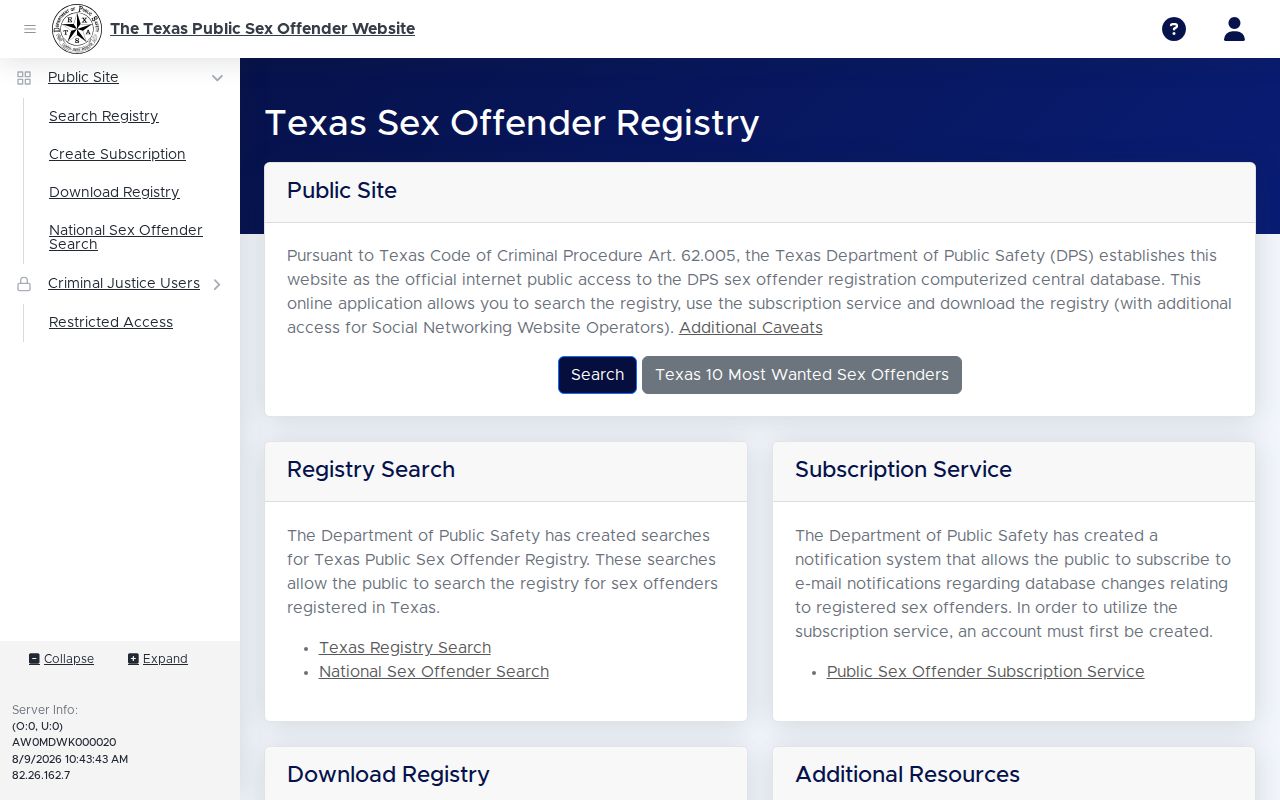
The state interface remains the source for Texas profile detail, even when a national search first reveals the match.
NSOPW offers the cross-state layer through its official national search, shown below.
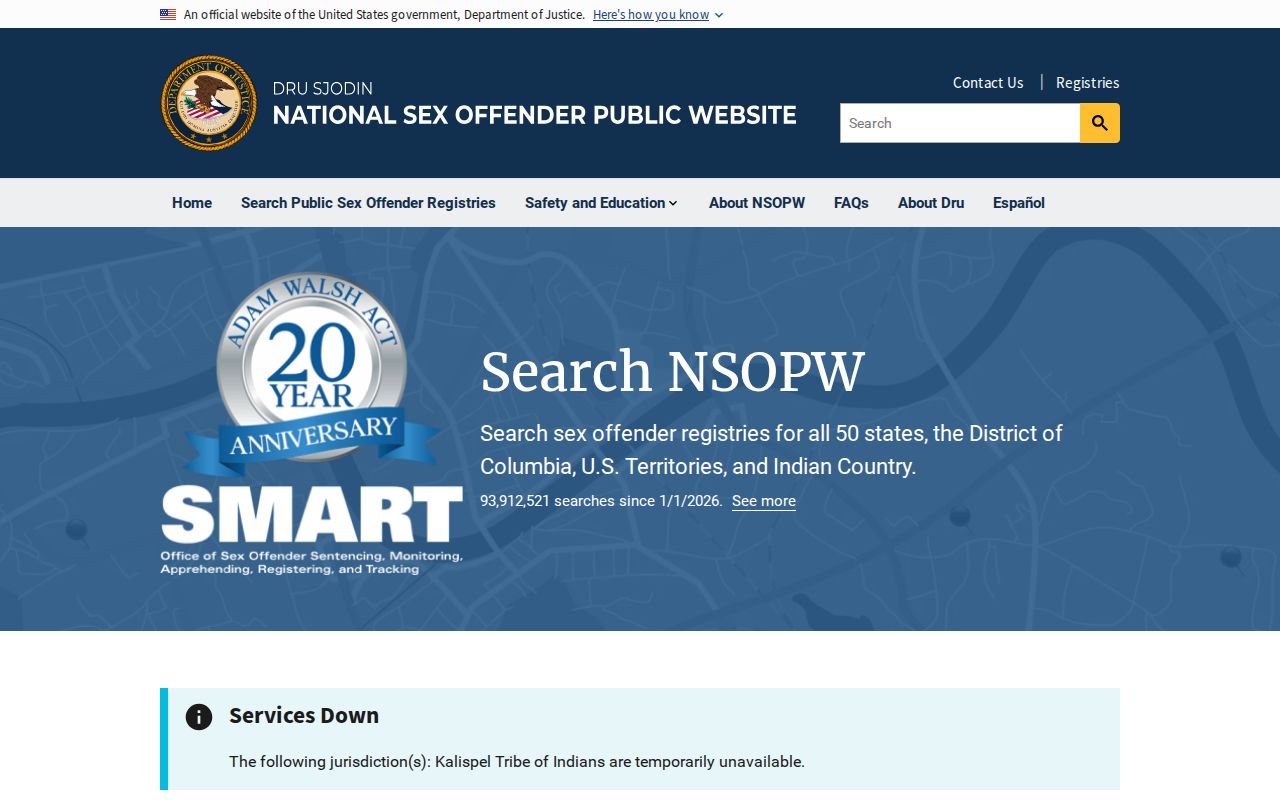
Use that broad result to return to the maintaining jurisdiction, verify identity, and read its current public record.
Collingsworth Registry and Criminal History
A registry profile has a narrow purpose. It publishes the fields required for a qualifying registration record. It does not list all arrests, every dismissed charge, unrelated convictions, or each filing in a court case. A search can therefore be accurate and still be incomplete as a general criminal history. For the wider county record path, consult the Collingsworth County criminal history overview.
The reverse is also true. A public conviction name search is not a substitute for a registry check. The registry adds reported address, verification, photograph, and registration status fields that a general conviction result may not contain. Choose the source that answers the question and verify it with the office that maintains the record.
Community Notification and Lawful Use
Registry data supports personal and family safety, neighborhood awareness, and lawful community notice. Texas may provide mailed, published, or school notice for designated cases. The form of notice depends on the governing classification and law. Collingsworth County has no verified public email-alert page, sheriff app, or posted community-meeting schedule. The official county directory and sheriff page are the local government routes for current options.
Use registry records lawfully: Texas Code of Criminal Procedure Article 62.009 restricts using registry information to injure, harass, or commit a crime. Never threaten or confront a registrant.
Report suspected noncompliance to law enforcement and describe the specific profile field at issue. A report lets the registration authority check its source files. It also protects the safety of neighbors, household members, and the person listed.